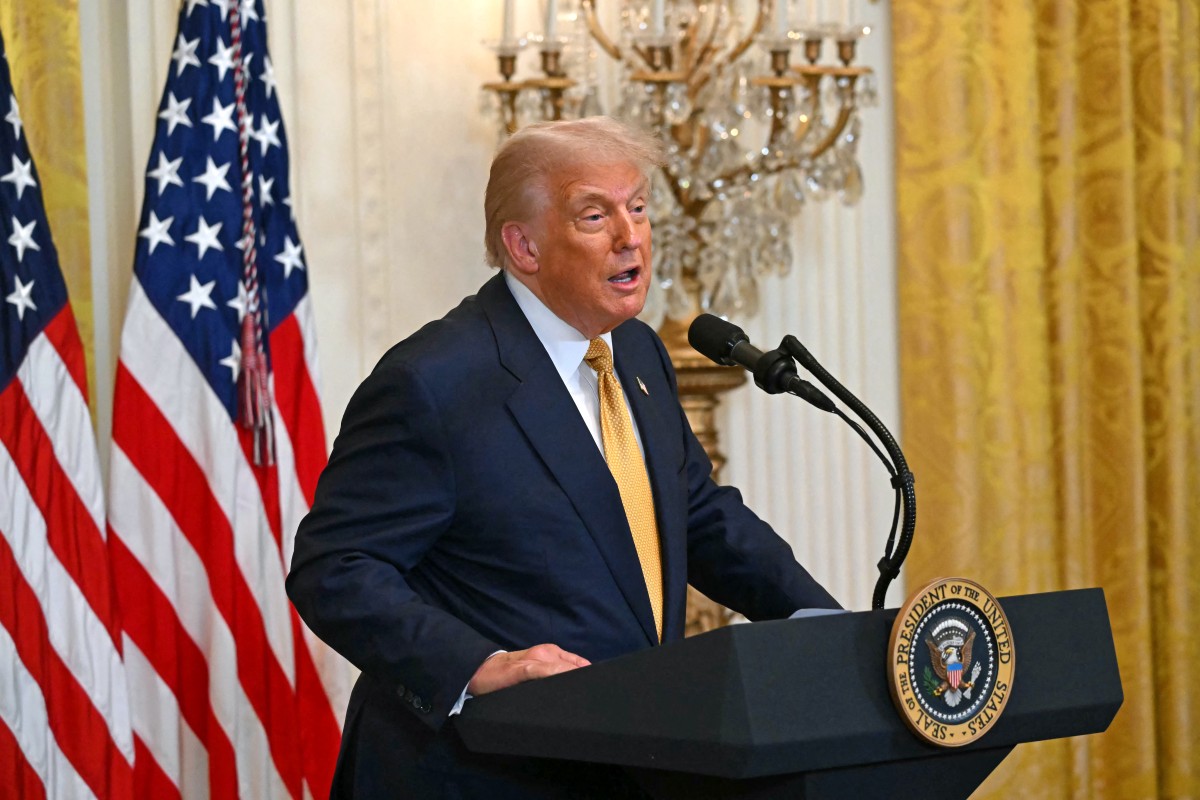
Former U.S. President Donald Trump revealed that the United States had finalized a trade agreement with Japan during his time in office, marking what he described as a significant step forward in strengthening economic relations between the two nations. The announcement was made as part of Trump’s broader efforts to recalibrate America’s trade policy during his presidency, shifting focus toward more favorable terms in existing agreements and establishing new bilateral deals with key global partners.
Based on Trump’s statement, the arrangement was designed to expand access for American agricultural items into Japanese markets and to lower specific tariffs that U.S. exporters viewed as competitive obstacles. In exchange, the United States promised to lower tariffs on a range of Japanese industrial products, aiming to improve mutual market entry. Although the agreement was not as comprehensive as a complete free-trade deal, both administrations described it as an initial step towards strengthening economic cooperation.
The trade agreement was developed after the United States decided to leave the Trans-Pacific Partnership (TPP), a collective trade deal originally involving Japan and many Pacific Rim nations. After the U.S. withdrew from the TPP in 2017, the Trump administration aimed to establish bilateral trade deals, claiming these would better benefit American interests and address perceived disparities in trade partnerships. In response, Japan expressed readiness to discuss a new arrangement to maintain economic collaboration with the U.S. despite the dismissal of the wider TPP structure.
For U.S. farmers, the deal promised improved access to one of the world’s largest and most affluent consumer markets. Agricultural producers, particularly in the beef, pork, dairy, and wheat sectors, had expressed concern that without a trade agreement with Japan, they risked losing ground to competitors from countries that remained part of the TPP, now known as the Comprehensive and Progressive Agreement for Trans-Pacific Partnership (CPTPP). The U.S.–Japan agreement sought to restore competitive parity by securing tariff reductions similar to those enjoyed by CPTPP member states.
On the Japanese end, the accord provided advantages to producers and exporters of specific equipment, industrial resources, and electronics for consumers, sectors where Japan holds a significant global standing. Japanese representatives highlighted that the agreement also emphasized the strategic significance of the U.S.–Japan partnership, both in terms of economics and global politics.
While the agreement did not touch on the complex issue of automobile tariffs—an ongoing point of contention between the two countries—it was viewed as a positive development, potentially paving the way for more comprehensive negotiations in the future. Trump emphasized that the deal signaled a renewed commitment to a “fair and balanced” trading relationship, one that he claimed had been lacking under previous arrangements.
The announcement drew mixed responses from economic analysts and trade experts. Supporters applauded the administration’s pursuit of bilateral agreements tailored to national interests and highlighted the potential gains for American agriculture. Critics, however, noted that the agreement lacked the breadth and enforcement mechanisms typical of more comprehensive trade deals. Some argued that rejoining a multilateral framework like the CPTPP might have yielded greater strategic and economic benefits in the long term.
Nonetheless, the deal was welcomed by business communities in both countries. U.S. agricultural associations expressed optimism that the agreement would help stem market share losses in Japan, while Japanese exporters looked forward to smoother access to the U.S. market for select goods. The signing of the agreement was seen as a moment of stability amid an often turbulent period for international trade, marked by escalating tensions between the U.S. and other trading partners, particularly China.
Beyond the immediate impacts on commerce, the agreement between the U.S. and Japan held wider geopolitical importance. Being two of the world’s largest economies and long-established allies, the economic collaboration between Washington and Tokyo is vital for ensuring stability in the Asia-Pacific region. The agreement highlighted a common interest in maintaining open markets, safeguarding intellectual property, and supporting trade practices based on established rules.
The agreement additionally signified a change in international trade dynamics during President Trump’s time in office, as the U.S. transitioned from extensive multilateral treaties to bilateral negotiations. This tactic was integral to Trump’s wider “America First” economic plan, aiming to revisit trade agreements to lessen U.S. trade shortfalls and bring back industrial employment. Although this policy garnered political backing from certain local groups, it also sparked worries about the weakening of multilateral frameworks and standards.
Looking forward, the U.S.–Japan trade agreement set a precedent for future bilateral negotiations with other countries, particularly those in Asia and the Pacific. Whether future administrations continue along this path or revert to multilateral frameworks remains to be seen. What is clear, however, is that the agreement marked an important milestone in one of America’s most strategic economic relationships.
For Japan, the agreement served as both an opportunity and a challenge. While it secured continued access to the American market, Japanese officials remained cautious about the broader implications of U.S. trade policy unpredictability. Still, by working through differences and securing a deal under challenging circumstances, both nations demonstrated the resilience and adaptability of their partnership.
The declaration by former President Trump regarding a finalized trade deal with Japan marked an important milestone in U.S. trade strategy. Despite being more limited than conventional trade agreements, the deal provided concrete advantages to crucial industries in both countries and underscored the importance of working together bilaterally. As international trade continues to change, these types of agreements might increasingly influence economic ties in the future.