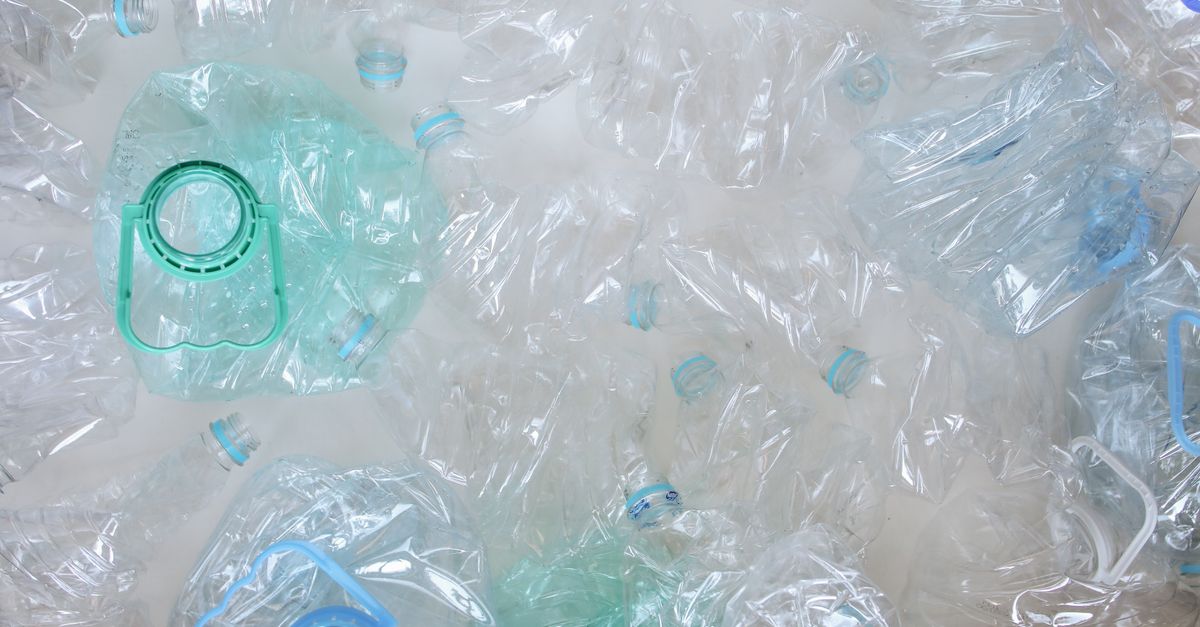
The global response to plastics has produced partial wins and many persistent failures. Production continues to expand, waste systems are under-resourced, policy mixes rely heavily on voluntary industry action, and many proposed technical fixes do not address root causes. The result is a growing flow of plastic pollution, entrenched fossil-fuel linkages, and rising social and environmental harms—especially in low- and middle-income countries.
Failure 1 — Production keeps growing while policy focuses on end-of-life
The discussion continues to lean heavily on waste handling and recycling even as the output of new plastics keeps rising. Global manufacturing now reaches hundreds of millions of tonnes annually, and industry forecasts for expanded petrochemical facilities point to even greater volumes ahead. Policymaking that emphasizes recycling programs and cleanup efforts instead of restricting virgin production results in a steady glut of low-cost virgin resin. Because virgin resin remains far cheaper than most recycled options, this economic imbalance weakens reuse initiatives and recycled-content requirements unless backed by firm regulation and substantial financial support.
Examples and implications:
- Recent petrochemical developments across the United States, the Middle East, and Asia have broadened feedstock capacity, effectively ensuring supply for many decades.
- In the absence of enforceable production limits or explicit phase-down commitments, recycling targets function as a short-lived reaction to an escalating challenge rather than a comprehensive remedy.
Shortcoming 2 — Recycling is frequently oversold and routinely fails to meet expectations
Common claims that recycling will solve the plastics crisis ignore practical limits. Estimates suggest only a small fraction of all plastic ever produced has been genuinely recycled into equivalent-quality products. Mechanical recycling struggles with contamination, mixed polymers, multilayer packaging, and additives that prevent closed-loop reuse. Many recyclable claims on packaging are ambiguous or misleading, confusing consumers and policymakers.
Key technical and practical issues:
- Multilayer and composite packaging is widely used because it performs well for barrier properties, but most such materials are not recyclable at scale.
- Contamination in household waste streams and inadequate sorting capacity reduce the yield and quality of recycled material.
- Downcycling is common: recovered plastic often has lower material properties and limited end uses, creating continued demand for virgin resin.
Failure 3 — “Chemical recycling” and other technological fixes are being promoted as mere greenwashing
Chemical recycling, pyrolysis, and other advanced technologies are often portrayed as catch-all fixes, yet most remain untested at large scale, can demand high energy use and generate significant carbon emissions, and at times label waste-to-energy processes as recycling when they essentially function as incineration or disposal. Funding these unproven methods can pull public investment and policy focus away from reuse, redesign, and truly circular systems.
Concerns and cases:
- Many chemical recycling facilities are small-scale pilots; commercial viability often depends on low-cost feedstock and regulatory incentives that may misrepresent environmental outcomes.
- Regulatory definitions that count energy recovery or feedstock production as ‘recycling’ distort national and corporate recycling statistics.
Failure 4 — Waste trade and export bans shifted rather than solved the problem
China’s 2018 National Sword policy, which sharply restricted foreign plastic waste imports, revealed how heavily the world relied on sending its refuse to nations with lower processing expenses, and instead of triggering major upgrades to domestic waste-management systems in exporting countries, these shipments were redirected across Southeast Asia, where they often ended up in unlawful or informal disposal practices that caused environmental degradation and various social harms.
Illustrative outcomes:
- After import restrictions in China, imports of plastic waste surged to Malaysia, Vietnam, and Thailand, straining local systems and sparking crackdowns and repatriations.
- Basel Convention amendments tightened controls on hazardous plastic waste shipments, but enforcement is uneven and illicit trade continues.
Failure 5 — Fragmented governance persists while widespread industry influence shapes decisions
Global governance on plastics is fragmented across multiple forums (trade, environment, health) and national policies vary widely. Many industry-led initiatives set voluntary targets and use public relations to claim progress, but lack independent verification, clear timelines, and accountability. This regulatory patchwork enables greenwashing and avoids systemic changes.
Governance weaknesses:
- Voluntary corporate commitments often lack standardized metrics, independent audits, and penalties for non-compliance.
- Trade and investment rules can conflict with environmental goals, complicating import controls and product standards.
- Global treaty negotiations have made progress on a mandate for a global plastics agreement, but proposals differ sharply on whether to include production controls, binding targets, and rights for impacted communities.
Failure 6 — In numerous regions, financing, infrastructure, and local capacity remain insufficient
Low- and middle-income countries frequently struggle with inadequate systems for collecting, sorting, and safely disposing of waste, and international funding for municipal waste services remains scarce; even when resources are available, they are often directed toward waste-to-energy initiatives or temporary solutions rather than long-lasting circular-economy investments.
Practical impacts:
- Expansive city populations produce plastic waste at a pace that outstrips available infrastructure, resulting in open-air disposal, unauthorized burning, and runoff through rivers that ultimately pollutes marine ecosystems.
- Informal waste laborers remain pivotal to material recovery, yet they often operate without official recognition, adequate safety measures, or equitable pay.
Failure 7 — Health and chemical risks receive minimal attention
Plastics often include a wide array of additives such as stabilizers, plasticizers, flame retardants, and colorants that may be harmful and can leach into goods, ecosystems, and people. Policies that concentrate solely on polymer categories overlook the dangers arising from intricate formulations and hazardous additives. Recycling materials that contain these substances can prolong exposure risks if these additives are not properly controlled or eliminated.
Examples:
- Recycled plastics intended for food-contact uses are subject to strict evaluations and limitations, and without these safeguards, impurities could migrate into supply networks.
- Long-standing additives, including certain flame retardants and plasticizers, often linger in waste streams and the broader environment for many years.
Failure 8 — Metrics and incentives are out of sync
Too often, success gets defined by flashy recycling statistics or high-profile corporate pledges rather than by real progress in total material flow, reductions in hazardous substances, or preventing leaks into natural ecosystems, while subsidies and fiscal policies routinely prioritize low-cost virgin polymer manufacturing instead of supporting reuse models or the production of recycled-content materials.
Policy misalignments:
- Recycling targets that lack quality and content requirements can incentivize low-value recovery rather than high-integrity circular solutions.
- Subsidies for fossil fuels and feedstocks lower the cost of virgin plastics, undermining demand for recycled alternatives.
Where evidence shows partial progress but signals persistent gaps
There are important policy and market developments—single-use plastics bans in several jurisdictions, extended producer responsibility programs in parts of Europe, amendments to the Basel Convention, and increased corporate reporting. However, the progress is uneven and often inadequate in scale and enforcement to counter rising production and consumption.
Notable examples:
- EU Single-Use Plastics Directive has reduced certain items in some member states, but loopholes and enforcement differences limit impact.
- Some producer responsibility systems improved collection rates, yet many lack strong recycled-content mandates and penalties to ensure circular outcomes.
What must change to correct these failures
Corrective actions require shifting policy emphasis from end-of-life fixes toward systemic reductions in production and redesign, coupled with accountable governance and finance. Changes include binding production limits, standardized definitions and measurement, enforceable recycled-content and phase-out mandates for problematic additives, strong EPR schemes with transparent reporting, regulated phase-out of non-recyclable packaging, investment in collection and formalization of waste workers, and restraint with unproven technological fixes like chemical recycling.
Priority interventions:
- Establish binding international and national rules that tackle production volumes rather than focusing solely on waste management.
- Harmonize labeling, metrics, and disclosure practices to curb greenwashing and support clear comparisons.
- Emphasize reuse, refill models, and product redesign to reduce material complexity and strengthen mechanical recycling feasibility.
- Eliminate the most hazardous additives and hard-to-recycle formats while channeling investment into safe, proven recycling processes where they are suitable.
- Shift subsidies and fiscal incentives away from virgin resin manufacturing and toward circular economy initiatives, particularly within low-income countries.
The current plastics response is a collection of partial solutions that too often reinforce the system that created the problem: plentiful, low-cost virgin plastics and dispersed, underfunded waste systems. Addressing that requires aligning policy incentives with material limits, centering the needs and rights of affected communities and workers, and making tough political choices about production and design so that reuse and high-integrity recycling can meaningfully scale.