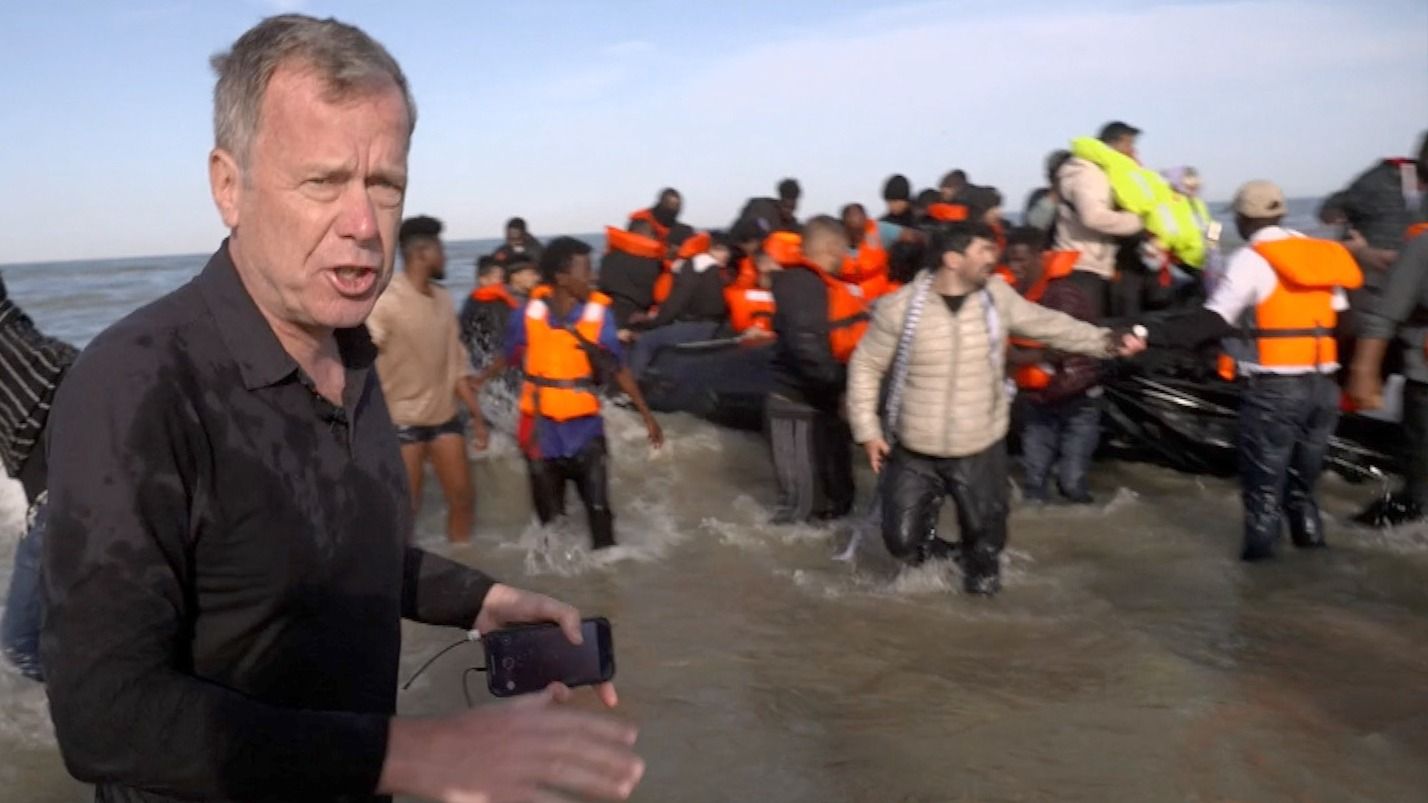
On the breezy shores of northern France, police officers recently thwarted a small boat from setting off towards the United Kingdom, in a continued effort to tackle the complicated problem of migrant crossings in the English Channel. This operation, conducted in the early morning, underscores the ongoing challenge European authorities encounter in handling unauthorised migration along this closely watched expanse of seashore.
The vessel in discussion, referred to by authorities as a “taxi-boat” because of its function in transporting migrants across the Channel, was impounded before embarking. Authorities acted swiftly near a familiar embarkation site commonly utilized by individuals attempting the perilous trip from France to the UK seeking refuge or improved prospects. Police, some equipped with riot gear, acted quickly to cut and incapacitate the inflatable vessel, making it inoperative.
This action reflects the intensified efforts by French authorities to disrupt the organized networks that facilitate these crossings. The crossing of the English Channel by small boats has surged in recent years, becoming a focal point of political debate, humanitarian concern, and international cooperation between France and the UK. Despite agreements and enhanced border patrols, the number of individuals risking the journey remains high.
The migrants involved in these crossings often come from conflict zones or impoverished regions across Africa, the Middle East, and Asia. Many have already endured harrowing journeys before reaching the northern French coastline. For them, the Channel represents the final obstacle in a long quest for safety, stability, or economic opportunity. Yet the waters between France and the UK are perilous, and numerous lives have been lost in failed attempts to make the crossing.
Enforcement measures like the recent capture of a boat seek to discourage these crossings by focusing on the transportation methods. Inflatable vessels—frequently unstable, crowded, and unsuitable for the perilous waters—are the main technique employed by traffickers to move migrants. By deflating the boats prior to departure, officials aim to stop these risky voyages and convey a warning to smuggling networks along the shore.
The British Broadcasting Corporation (BBC), present on the scene to document the incident, captured images of French police carrying out the operation under challenging weather conditions. The presence of the media underscores the high-profile nature of the migrant crisis and the public scrutiny surrounding government responses. The images of slashed boats and displaced migrants serve as powerful reminders of the human stakes involved in this ongoing issue.
French officials have maintained that their actions are in accordance with legal frameworks aimed at safeguarding lives and maintaining order. They stress that stopping unsafe boat crossings not only prevents potential tragedies at sea but also disrupts the criminal networks profiting from vulnerable individuals. However, these measures are not without controversy. Human rights organizations have criticized the tactics, arguing that prevention strategies do little to address the root causes driving people to undertake such desperate journeys.
The UK and France have collaborated closely to tackle the matter, with both nations committing funds to boost monitoring, enhance border protection, and share intelligence. Patrol operations along the French shoreline have intensified, and more assets have been designated to oversee the maritime areas more efficiently. In spite of these measures, crossings have persisted, driven by elements like political unrest, economic hardship, and restricted availability of lawful migration pathways.
Critics argue that deterrence measures alone are insufficient to stem the tide of Channel crossings. They advocate for more comprehensive solutions, including the creation of safe and legal pathways for asylum seekers, greater cooperation on resettlement programs, and broader diplomatic efforts to address conflicts and economic disparities in migrants’ countries of origin.
For the individuals directly impacted—those who have fled violence, persecution, or extreme hardship—the destruction of a boat represents yet another setback in a journey marked by danger and uncertainty. Many are forced to return to makeshift camps in and around Calais and Dunkirk, where living conditions remain harsh and resources scarce. These camps, often dismantled by authorities, reflect the persistent limbo in which thousands of displaced people find themselves.
The charitable aspect of the Channel emergency remains a significant concern for advocacy organizations and global monitors. Preventing dangerous crossings is crucial for saving lives, yet numerous voices contend that approaches should also focus on respecting human dignity, safeguarding rights, and ensuring access to just asylum processes. The image of officers cutting boats, even though aimed at preventing catastrophe, highlights the utter despair of those who perceive no other feasible method to find safety.
In the UK, the debate over how to respond to the increasing number of small boat arrivals remains contentious. Government officials have introduced legislation aimed at tightening asylum procedures and increasing penalties for unauthorized entry, while also pledging to speed up deportations. These policies have sparked legal challenges and criticism from human rights organizations who warn that such approaches may violate international obligations to protect refugees.
Los cruces por el Canal son representativos de un desafío migratorio más amplio a nivel global, en el cual el desplazamiento debido a conflictos bélicos, cambios climáticos y dificultades económicas está incrementándose. En toda Europa, los países están luchando por encontrar un equilibrio entre la seguridad fronteriza y las responsabilidades humanitarias. La situación en la costa norte de Francia representa solo un capítulo de esta narrativa más extensa y compleja.
Meanwhile, French authorities have reaffirmed their commitment to preventing illegal departures while calling for continued collaboration with the UK. Additional funding, technology, and manpower have been deployed to disrupt smuggling networks that adapt and evolve to circumvent enforcement measures. Despite these efforts, the crossings persist, underscoring the resilience and desperation of those determined to reach British shores.
For migrants, the trip is frequently seen as their final option. Numerous individuals find themselves with no alternatives after being refused asylum in other places or experiencing exploitation in different nations. Their resolve to attempt the perilous passage highlights the challenges they have faced and the aspirations they continue to harbor.
As the problem evolves, there is an increasing awareness that temporary enforcement strategies need to be paired with extended plans targeting the underlying reasons for displacement. This involves aiding conflict resolution, providing development aid, and establishing more equitable international asylum systems. In the absence of these actions, the cycle of perilous migrations, enforcement efforts, and human distress is expected to persist.
The recent interception of the boat on the French coast serves as a stark illustration of the ongoing struggle to manage migration in the Channel. It is a story marked by complex legal, political, and humanitarian challenges—one that calls for a response that goes beyond deterrence to address the deeper forces driving people to risk everything for the hope of a better life.